
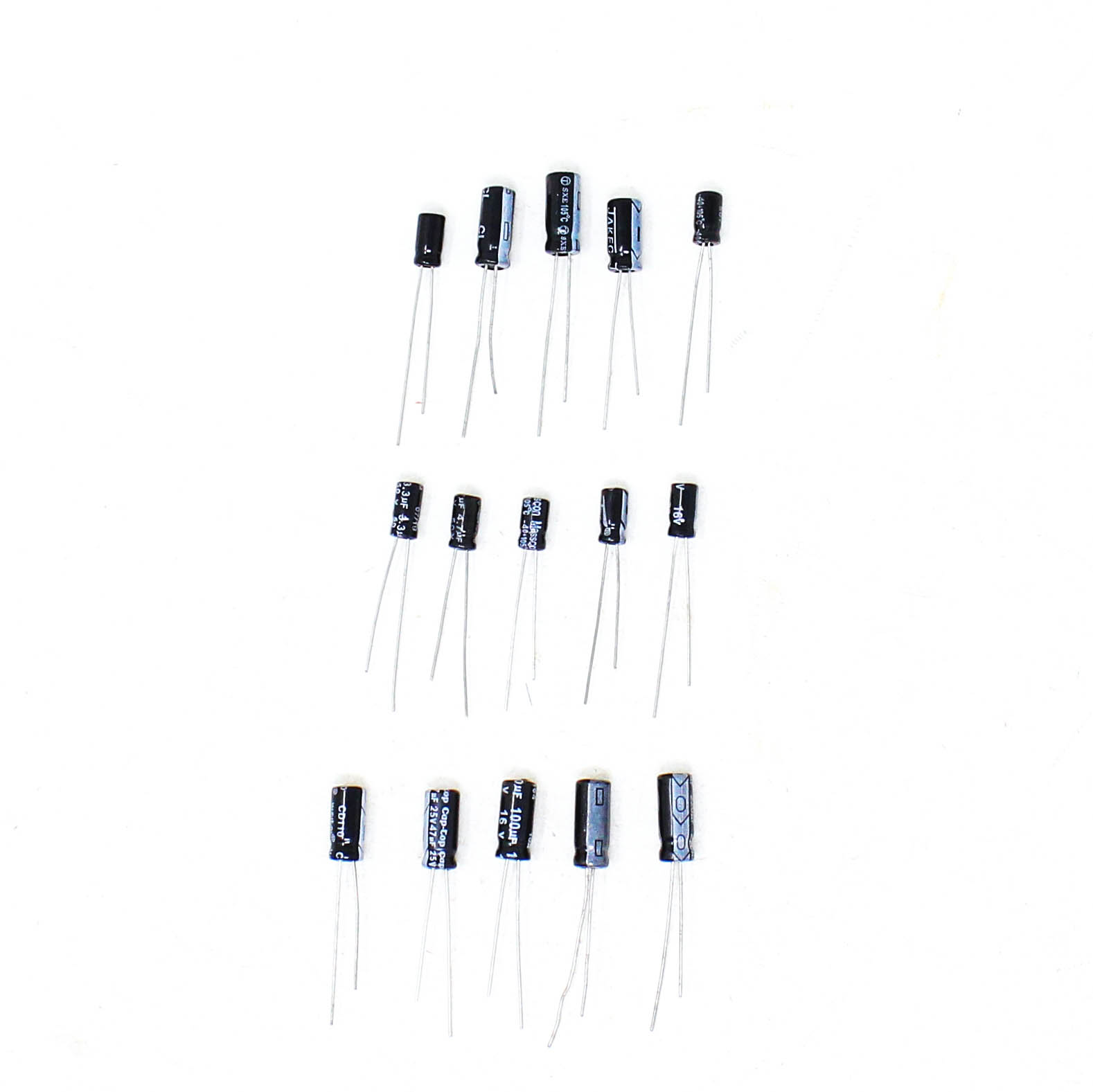
Electrolytic capacitors store and release electrical energy by utilizing an electrolyte solution and two conductive plates separated by a dielectric material. When a voltage is applied, the electrolyte forms a conductive path between the plates, allowing the capacitor to store charge.
Do not exceed the maximum voltage rating of the capacitor.
Avoid exposing the capacitor to extreme temperatures.
Do not short-circuit the capacitor.
Handle with care to prevent damage to the capacitor.
Store in a cool, dry place to maintain performance.
Use appropriate voltage ratings to avoid overloading the capacitor.
0.1uF to 220uF
50V maximum
Ensure correct polarity when connecting the capacitor in a circuit.
Connect the positive lead of the capacitor to the positive terminal of the circuit and the negative lead to the negative terminal.
Observe proper soldering techniques to ensure a secure connection.
17 × 9.5 × 2.4 cm
0.121 kg

