
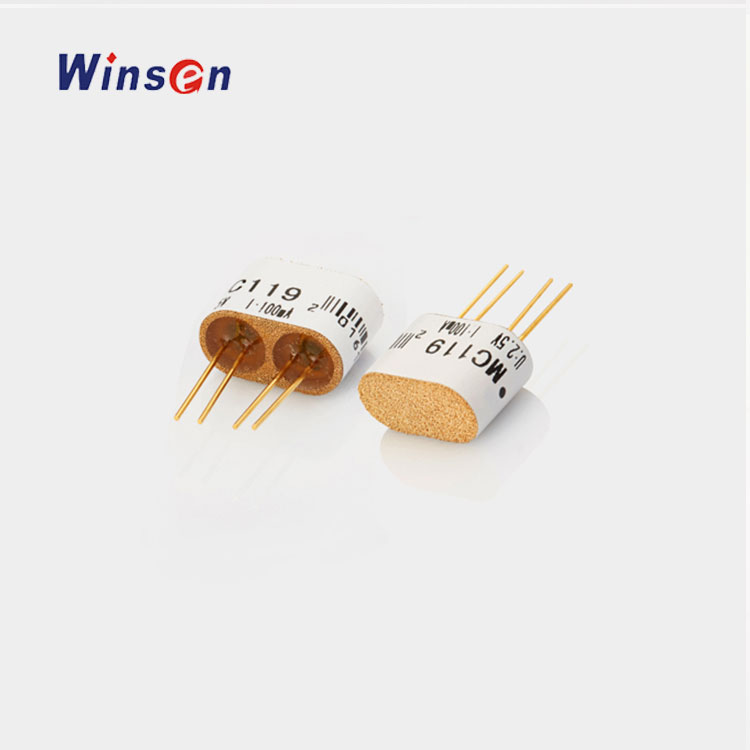
Winsen MC119 Catalytic Flammable Gas Sensor

Ask Our AI Assistant

Product Image
Working Principle

Description

The Winsen MC119 sensor operates on the catalytic combustion principle. It features two arms of an electric bridge, which includes a test element and a compensate element. The resistance of the test element increases when exposed to combustible gases, causing a change in the output voltage of the bridge. This voltage variation is directly proportional to the gas concentration. The compensate element helps in compensating for temperature and humidity effects.

Sensor Types

Catalytic

Dos And Donts

Donts

  • Avoid High Concentration Exposure: Do not expose the sensor to gas concentrations outside the 0-100% LEL range to prevent sensor damage.,
  • Prevent Exposure To Extreme Conditions: Avoid using or storing the sensor in environments outside the specified temperature and humidity ranges.

Dos

  • Ensure Correct Voltage: Operate the sensor at the specified voltage of 2.5±0.1 V to ensure accurate functioning.,
  • Check Compatibility: Use the sensor within its specified gas detection range and environmental conditions.
Limits

Electrical

  • Voltage: 2.5±0.1 V,
  • Current: 100±10 mA

Environmental

  • Temperature Range: -40 to +70°C for operation, -20 to +70°C for storage,
  • Humidity: Less than 95% RH, non-condensing
How To Connect

Circuit Integration

  • Description: Integrate the sensor with a simple drive circuit. Ensure that the bridge output is connected correctly to interpret the voltage variations corresponding to gas concentrations.
Dimensions

Physical Size

19×9.5×14 mm

Shipping Dimensions

4 × 4 × 1 cm

Weight

0.002 kg